Discover how eco-tourism in Africa transforms travel into a force for good—protecting wildlife, empowering communities, and delivering unforgettable, sustainable safari experiences.
Introduction: More Than a Game Drive
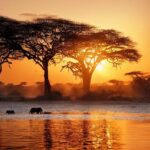
Sunrise paints the acacia-studded plains of the Serengeti gold as you step out of your solar- powered tent. In the distance, a matriarchal elephant herd grazes quietly, undisturbed. Your local guide—a Maasai warrior turned eco-ranger—greets you with a nod and explains how your stay helps fund wildlife protection, school scholarships, and community health clinics.
This is eco-tourism: travel that heals rather than harms.
Across Africa—from Kenya’s Maasai Mara and Namibia’s communal conservancies to Rwanda’s mist-shrouded gorilla forests—eco-tourism is transforming the safari experience. It’s a new way of exploring the continent, where responsibility, resilience, and respect take the driver’s seat.
What Is Eco-Tourism?
Eco-tourism is a model of responsible travel designed to:
- Minimize environmental impact
- Fund wildlife conservation
- Empower local communities
- Foster authentic cultural exchange
- Promote long-term ecological and social sustainability
In a continent with eight biodiversity hotspots, over 1,100 mammal species, and rich indigenous knowledge systems, eco-tourism plays a critical role in protecting both nature and culture.
Community-Led Conservation: Ownership and Opportunity
Namibia’s Communal Conservancies
Namibia pioneered a groundbreaking model where rural communities co-own and manage wildlife areas.
- Revenue Sharing: Proceeds from eco-lodges, photography permits, and guided tours are funneled directly into local schools, clinics, and households.
- Impact: Poaching has dropped by over 90%. Populations of elephant, lion, and black rhino are steadily recovering.
- Gender Inclusion: Women now lead anti-poaching units and serve as eco-guides, reshaping traditional roles while improving livelihoods.
Kenya’s Maasai-Led Conservancies
In Kenya, Maasai landowners partner with conservation operators by leasing land for low- density safari use.
- Dual Income: Communities retain grazing rights while earning sustainable income from tourism.
- Wildlife Benefits: Regulated grazing and corridor protection support thriving populations of cheetahs, zebras, and vultures.
- Tourism Experience: Guests enjoy exclusive access and deep cultural interactions guided by those who call the land home.
Responsible Safaris: Luxury Meets Low Impact
Modern safaris are evolving to blend comfort with conscience. Eco-Lodges with Purpose
Eco-lodges are designed to minimize ecological disruption while maximizing benefit to local people:
- Off-Grid Power: Solar and biomass energy run entire camps.
- Water Conservation: Rainwater collection and composting toilets help preserve water resources.
- Local Materials & Labor: Construction with local stone, wood, and thatch supports artisans and maintains regional aesthetics.
Example: In Rwanda, Bisate Lodge reinvests 25% of profits into gorilla habitat restoration and community education.
Low-Impact Game Drives
- Electric & Hybrid Vehicles: These reduce noise pollution and carbon emissions.
- Walking & Camel Safaris: Offer a slower, more immersive connection to the land, guided by trackers with ancestral knowledge.
- Small Groups: Keep wildlife disturbance low and create space for dialogue with expert guides.
Wildlife Conservation: Tourism as a Lifeline
Across Africa, conservation is being funded—quite literally—one permit at a time. Gorilla Permits in Rwanda & Uganda
With each permit costing US$1,500, these funds support:
- Veterinary teams for endangered mountain gorillas
- Anti-poaching patrols
- Forest regeneration and buffer zone protection
- Community education and infrastructure
Today, mountain gorilla populations have more than quadrupled from their 1980s low of under 250.
Other Wildlife Wins
- South Africa’s Rhino Sanctuaries: Private reserves with visitor income support cutting- edge anti-poaching tech and rhino breeding.
- Elephant Corridors in Zimbabwe & Botswana: Tourism revenue helps communities purchase land to maintain traditional migratory paths.
Cultural Connection: Respect Over Performance
Eco-tourism honors culture through collaboration, not consumption.
- Host-Led Experiences: Guests learn beadwork, music, and foraging techniques from community members—not actors.
- Fair Trade Crafts: Direct sales of batik, baskets, and carvings ensure artisans receive fair compensation.
- Photographic Ethics: Visitors are encouraged to seek consent before taking photos— especially during ceremonies or in sacred areas.
Economic Empowerment: Travel That Gives Back
Beyond conservation, eco-tourism unlocks lasting development:
- Job Creation: From chefs and drivers to naturalists and craft sellers.
- Infrastructure Improvements: Safari income has built roads, clinics, and even solar microgrids in remote areas.
- Education & Skills: Scholarships and vocational training programs develop future eco- leaders.
Case Study: In Botswana’s Okavango Delta, community-run tourism helped secure UNESCO World Heritage status, opening new funding and protection pathways.
Challenges & Ethical Solutions
While eco-tourism holds promise, pitfalls remain:
Issues:
- Greenwashing: Some lodges exaggerate sustainability credentials.
- Carbon Emissions: International flights still leave a significant footprint.
- Land Rights Tensions: Mismanaged tourism can displace indigenous or pastoralist communities.
Solutions:
- Certified Sustainability: Look for accreditation from bodies like the Global Sustainable Tourism Council (GSTC).
- Offset & Travel Smart: Support carbon offset projects or opt for rail and road travel where possible.
- Community-Led Planning: Ensure local councils participate in land-use and tourism decisions.
Final Reflection: Travel as a Force for Good
Eco-tourism in Africa is not just a travel trend—it’s a movement of mindfulness and equity. Every guest has the power to be more than a spectator:
- A conservation partner
- A cultural student
- A community ally
So, before you book your next safari or getaway, ask:
“What will I preserve, protect, and uplift?”
Because in Africa, every journey can help restore the balance between people, wildlife, and the wild lands they share.
 Wainga the healer: witchcraft, wisdom, and resistance in colonial Kenya
Utforska berättelsen om Wainga, en helare från Nyeri som anklagades för att "syssla med Satan" under Kenyas koloniala nödsituation. Upptäck hur helande, ritual och visdom blev handlingar av motstånd, överlevnad och…
 Wise beasts & cunning creatures: animal myths and legends in African folklore
Vid eldens sken berättades historier inte bara för att underhålla, utan för att föra vidare själen av gemenskapen. Och i många av dessa historier var djuren hjältar, skurkar och vägledare. Genom hela…
 Sacred trees and spirit forests: nature in African spiritual cosmology
Utforska Afrikas heliga träd och andliga skogar, där naturen möter förfäders andlighet. Upptäck Yoruba-, Kikuyu- och Vodun-traditioner kopplade till heliga lundar