Something extraordinary is happening across Africa a quiet but powerful shift that is reshaping economies, communities, and the very idea of what this vast continent can become. From the sun-baked streets of Dakar to the glass towers rising above Nairobi, Africa is writing a new chapter, and the world is beginning to pay attention.
This is not a story told in a single headline or a single moment. It is a story of millions of individual choices, bold policies, and ancient cultures finding new expression in a rapidly changing world. Understanding it requires stepping back and looking at the full picture.
A Demographic Giant Stirs
Africa is home to more than 1.4 billion people, and by 2050, that number is expected to double. The continent’s median age is just 19 years making it the youngest major population on Earth. Where some see pressure, others see potential: a vast, educated, and increasingly connected generation ready to drive innovation and growth in ways that previous generations never could.
In cities like Lagos, Addis Ababa, and Accra, young entrepreneurs are launching tech startups, creative agencies, and agricultural ventures that are drawing international investment and changing the narrative about what African business looks like. The so-called “Africa rising” story is no longer simply a slogan for many, it is a lived experience.
Technology as a Catalyst
Perhaps nowhere is Africa’s transformation more visible than in the realm of technology. Mobile money services, pioneered by Kenya’s M-Pesa, have given tens of millions of people access to financial tools that were once the exclusive domain of the formally banked. Today, the concept has spread across the continent, with similar platforms operating in Ghana, Tanzania, Uganda, and beyond.
In Rwanda, the government has embraced drone technology to deliver medical supplies to remote areas a solution so effective that it has attracted attention from health authorities around the world. In South Africa, fintech companies are reimagining insurance, lending, and savings for communities long underserved by traditional banks.
The continent that was once described as “leapfrogging” fixed telephone infrastructure to go straight to mobile phones is now leapfrogging again this time into digital finance, renewable energy, and smart agriculture.
Culture, Identity and a New African Voice
Alongside economic change, something equally profound is happening in African culture. Afrobeats has conquered global music charts. African fashion designers are filling the runways of Paris and Milan. Nigerian cinema Nollywood is the second-largest film industry in the world by volume, and its stories are finding audiences far beyond Lagos.
This cultural renaissance is more than entertainment. It is a reclaiming of narrative. For generations, Africa was described primarily through the lens of crisis famine, conflict, instability. Today, a new generation of African journalists, filmmakers, writers, and artists is insisting on a fuller, more complex portrait of a continent that contains 54 countries, thousands of languages, and an almost incomprehensible diversity of traditions, landscapes, and lived experiences.
“We are not a monolith,” says one Nairobi-based writer and cultural commentator. “We are not a problem to be solved. We are a civilisation and we are very much alive.”
Challenges That Cannot Be Ignored
To tell only the story of progress would be to fall into a different kind of distortion. Africa faces serious, structural challenges that demand honest acknowledgement. Climate change is hitting the continent with particular ferocity from devastating floods in Sudan and Nigeria to prolonged drought across the Horn of Africa and the Sahel. Communities that have farmed the same land for generations are finding their livelihoods under threat from forces largely beyond their making.
Political instability, too, remains a reality in several regions. A wave of military coups in West and Central Africa including in Mali, Burkina Faso, Guinea, and Niger has raised hard questions about democratic governance and the role of international partners. Conflict in eastern Democratic Republic of Congo continues to cause immense human suffering, despite decades of international engagement.
None of this is simple, and none of it fits neatly into either a story of pure triumph or pure despair. The truth, as always, lies in the complexity in the farmer in Senegal who has installed solar panels to power her irrigation system, even as the rains grow less predictable. In the journalist in Ethiopia who continues to report despite enormous pressure. In the community in Zimbabwe that has built its own clinic because no one else would.
Looking Forward
What Africa becomes over the next generation will depend on decisions being made right now by governments, by businesses, by communities, and by ordinary people navigating extraordinary circumstances. The continent’s story is far from written, and that is precisely what makes it one of the most important stories of our time.
At tropiki.online, we believe that story deserves to be told with the depth, nuance, and respect it demands. Not as a distant drama observed from abroad, but as a living, breathing reality shaped by real people, real history, and real possibility.
Africa is not awakening, it never slept. It is simply, at last, being heard.
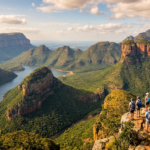 Africa's hidden wonders: a journey into the continent's best-kept secrets
Afrika är en kontinent av extraordinära kontraster, gamla civilisationer och moderna städer, vidsträckta öknar och täta regnskogar, tysta byar och dånande vattenfall. Ändå, för all sin rikedom, mycket av…
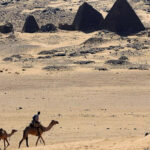 The Story of Africa’s Best-Kept Secrets
Afrika har en rik och komplex historia, men det finns en utbredd okunnighet om detta arv. En berömd brittisk historiker sade en gång att det endast fanns européernas historia i Afrika. På senare…
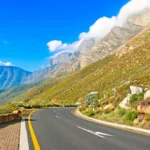 From the Sahara to the Cape: Africa's most scenic road trips
Upptäck Afrikas ultimata vägtrippar—Marockos Atlasberg, Namibias öknar, Sydafrikas Garden Route, Tanzanias safari-circuit och Lesothos Sani Pass. Inkluderar kartor, tips och kulturella avstickare.